
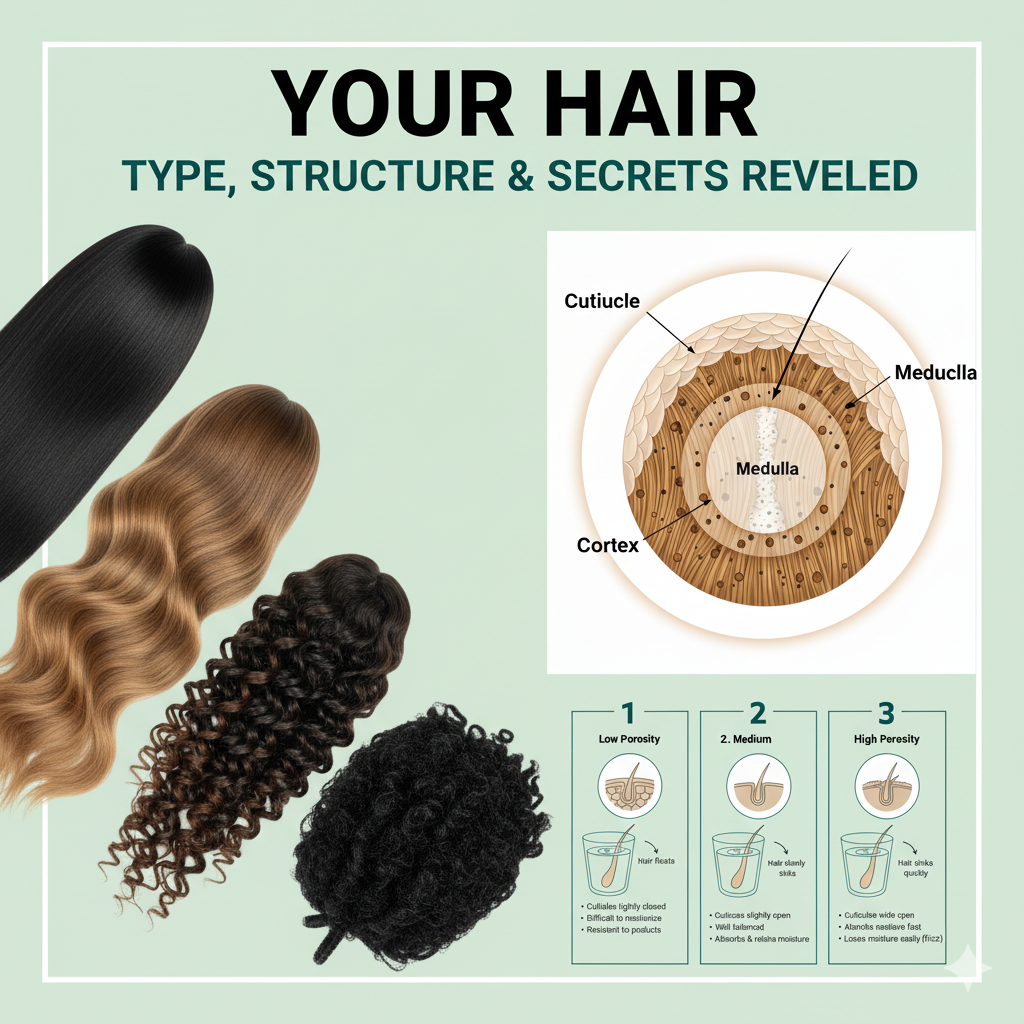
Ever wonder why your friend’s hair air-dries into perfect waves while yours needs a battle with a curling iron? Or why some people can go weeks without washing their hair, while yours feels greasy after a day? The answer lies in the fascinating world of hair type and structure!
Understanding your hair isn’t just about looking good; it’s about treating it right. When you know what makes your hair tick, you can choose the best products and routines to keep it healthy, happy, and looking its absolute best.
Let’s unravel the mysteries of our magnificent manes!
The Building Blocks: What is Hair Made Of?
Before we dive into types, let’s understand what hair actually is. Each strand of hair is primarily made of a protein called keratin. This is the same tough protein found in your skin and nails!
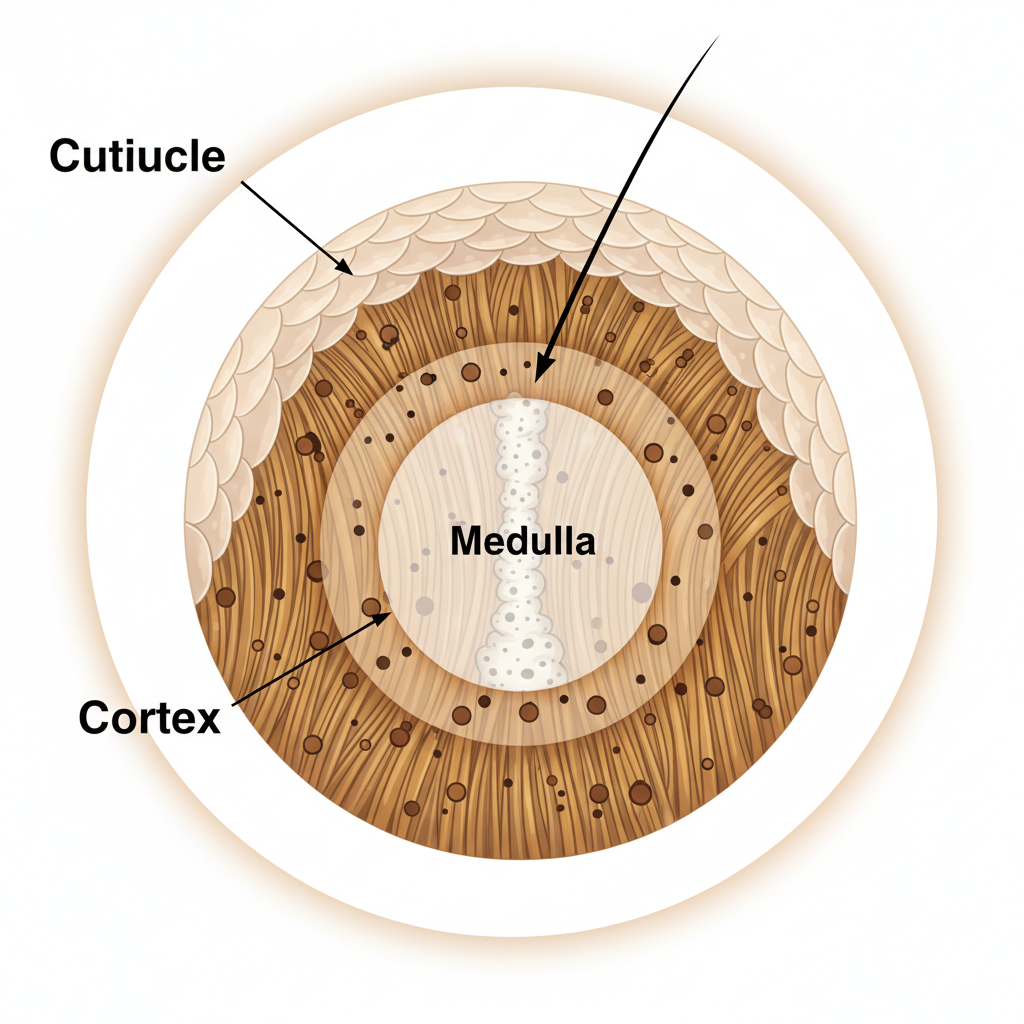
Think of a single hair strand like a tiny, intricate cable. It has several layers:
- The Cuticle: This is the outermost layer, made up of tiny, overlapping scales, much like shingles on a roof. When these scales lie flat, your hair looks smooth and shiny. When they’re raised, hair can look dull, frizzy, and be more prone to damage.
- The Cortex: This is the thickest part of your hair, nestled right under the cuticle. It contains the majority of your hair’s pigment (melanin, which gives your hair its color) and determines its strength and elasticity.
- The Medulla: Not all hair has a medulla, but when present, it’s the innermost core of the hair shaft. Its exact function isn’t fully understood, but it’s thought to play a role in hair’s overall strength and thickness.
Imagine this microscopic view:
Hair Type: It’s All About the Curl!
When we talk about “hair type,” we’re usually referring to your hair’s curl pattern. This is largely determined by the shape of your hair follicle (the tiny opening in your scalp where hair grows from).
Here’s a common way to categorize hair types, often called the “Andre Walker Hair Typing System”:
Type 1: Straight Hair
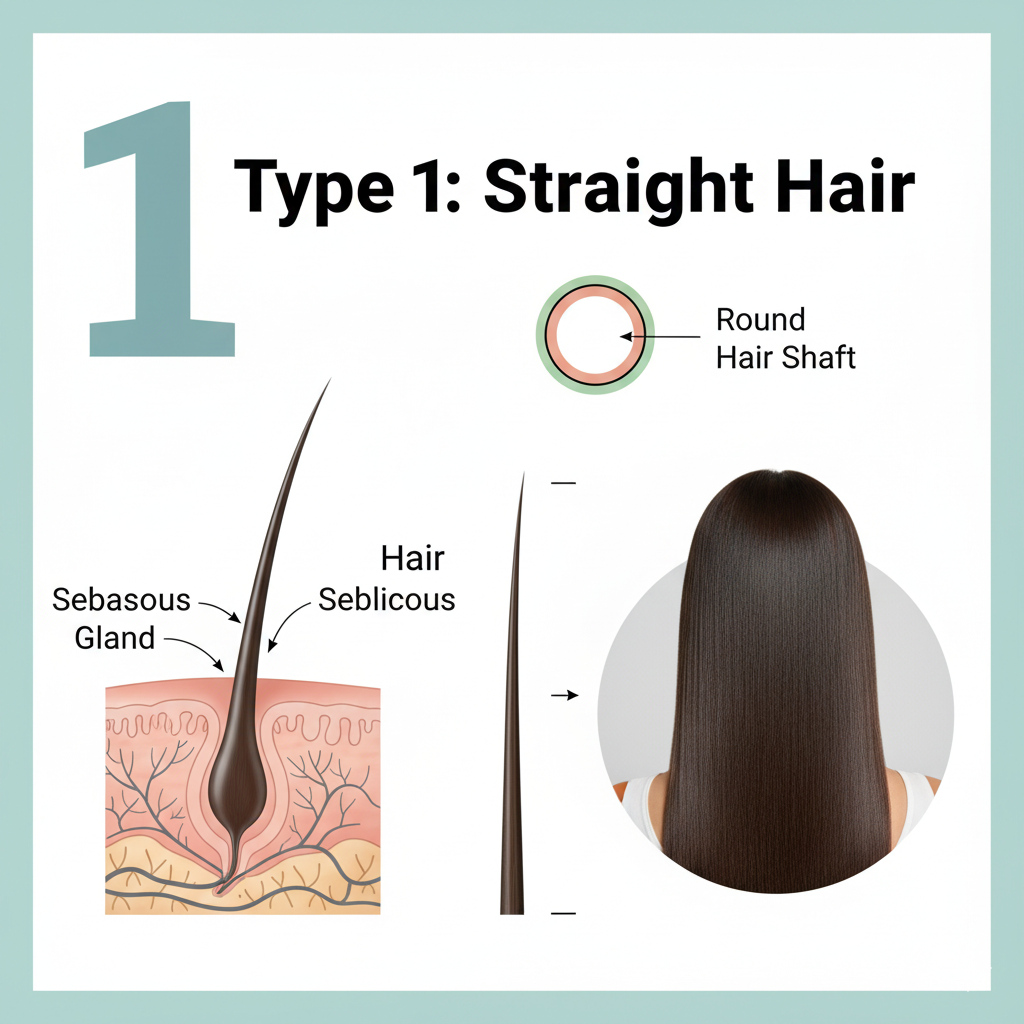
This hair type has no natural curl. The hair follicle is typically round, allowing the hair to grow straight out.
- 1A (Pin-straight): Extremely fine and soft, can be difficult to hold a curl.
- 1B (Straight with body): Still straight, but with a bit more volume and texture, making it easier to style.
- 1C (Coarse/Thick Straight): Very thick and often more resistant to curling. Can sometimes have a slight wave.
Challenges: Can often appear oily quickly because the natural oils (sebum) from your scalp can easily travel down the smooth hair shaft.
Type 2: Wavy Hair
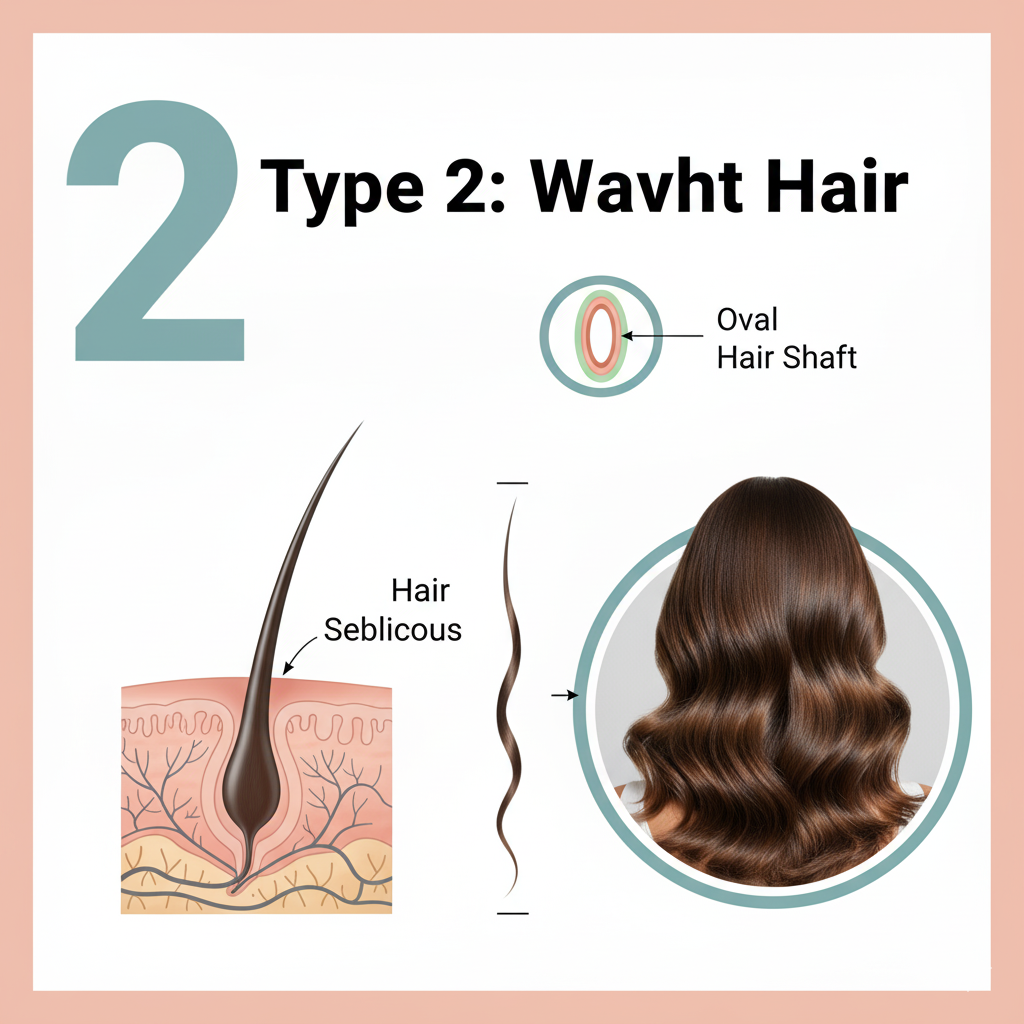
Wavy hair has a distinct S-shape pattern. The follicles are typically more oval-shaped.
- 2A (Fine, S-waves): Loose, stretched-out waves that can be easily straightened.
- 2B (Medium waves): More defined S-waves, but the hair near the scalp can still be fairly straight. Can be prone to frizz.
- 2C (Coarse, defined waves): Very defined S-waves, bordering on curly. Often thicker and more prone to frizz.
Challenges: Frizz can be a major issue, and waves can easily lose their definition.
Type 3: Curly Hair
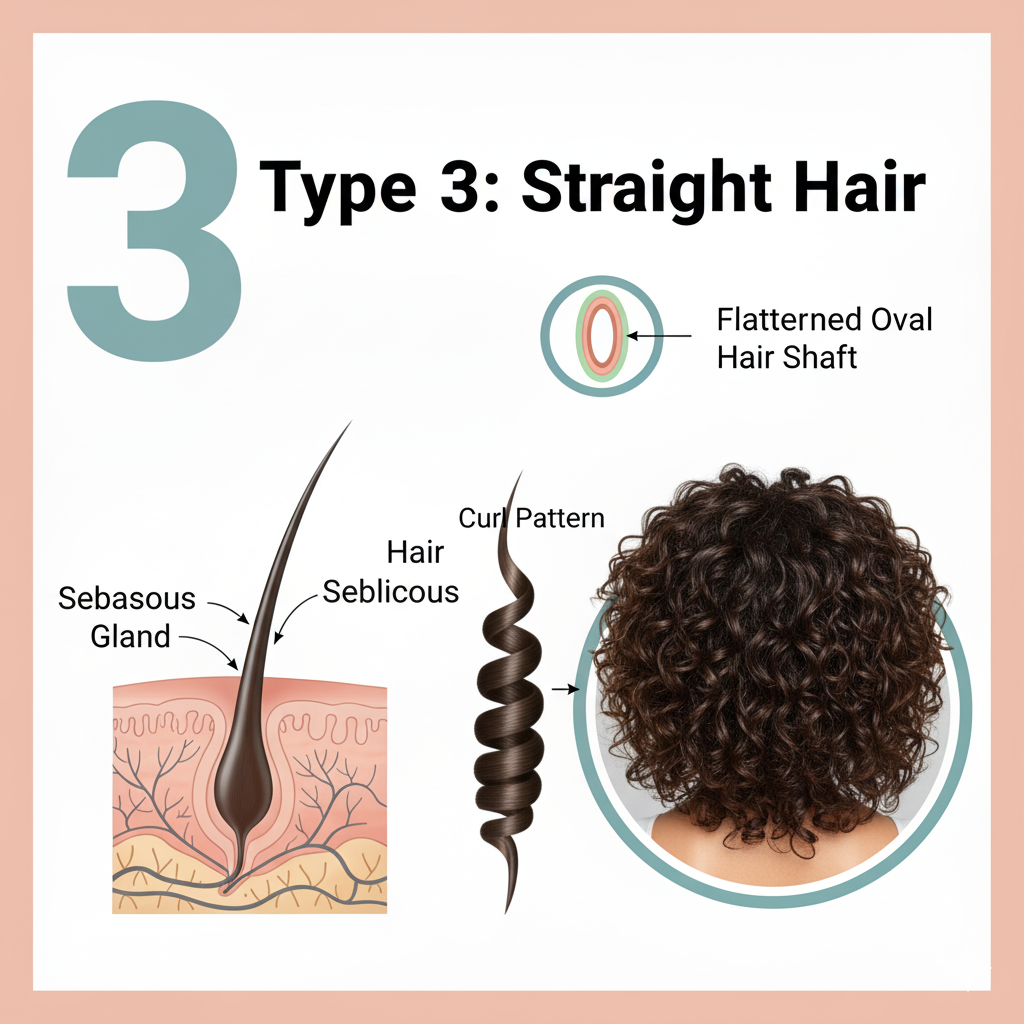
Curly hair forms distinct curls, ranging from loose spirals to tight corkscrews. The follicles are typically oval to flattened oval.
- 3A (Loose curls): Large, loopy curls (often the size of a sidewalk chalk stick).
- 3B (Tight curls): Springy, well-defined curls (often the size of a marker).
- 3C (Corkscrew curls): Very tight, dense corkscrew curls (often the size of a pencil).
Challenges: Can be very prone to dryness and frizz, as the natural oils have a harder time traveling down the coiled hair shaft.
Type 4: Coily/Kinky Hair
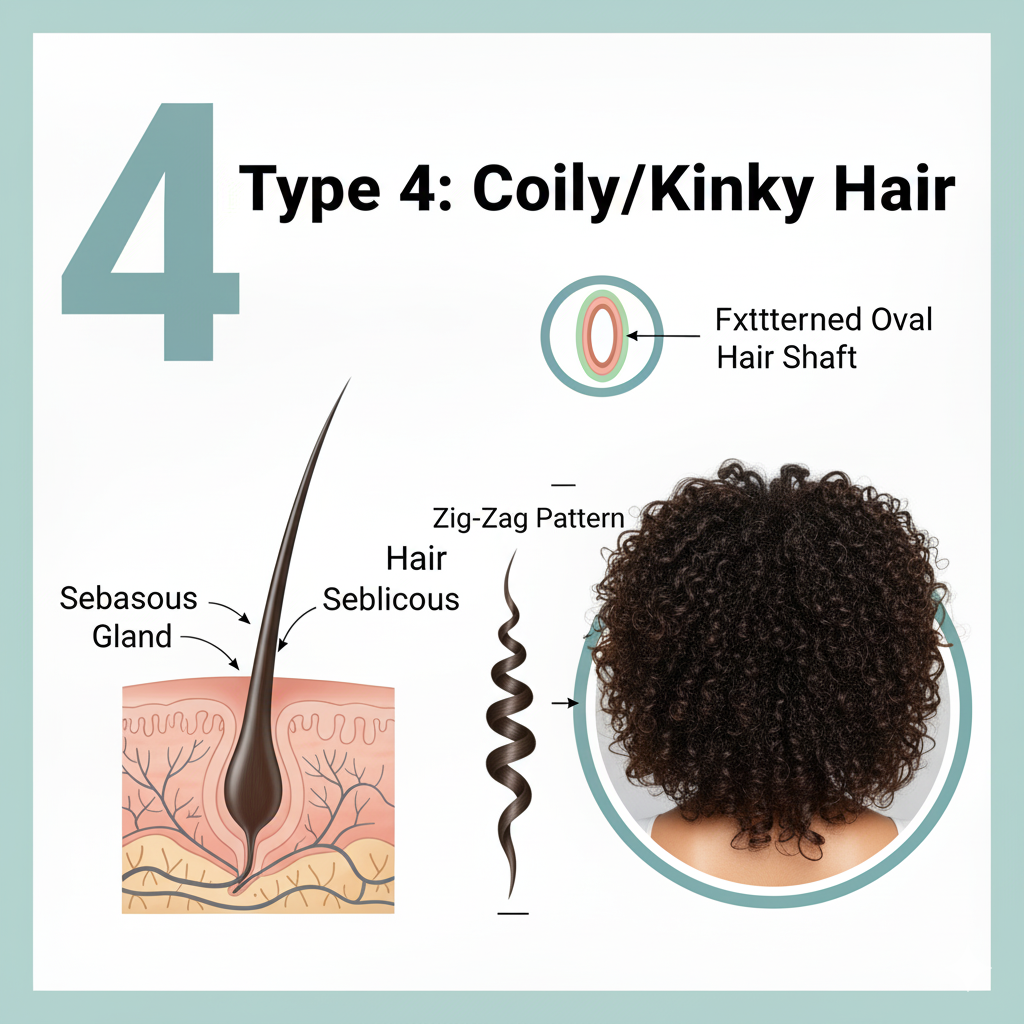
This type features very tight, often zigzag patterns, with coils so tight they may not even look like curls. The follicles are typically flattened oval.
- 4A (S-pattern coils): Dense, springy S-shaped coils.
- 4B (Z-pattern coils): Tightly crimped, Z-shaped coils that have sharper angles.
- 4C (Tightly coiled/kinky): Very dense, fine strands with a very tight zigzag pattern, prone to shrinkage.
Challenges: The most fragile hair type, highly prone to dryness, breakage, and extreme shrinkage. Requires significant moisture and gentle handling.
Beyond Curl: Other Important Hair Characteristics
While curl pattern is a big part of your hair type, it’s not the whole story! These other factors are crucial for understanding your hair’s needs:
- Hair Texture (Fine, Medium, Coarse)
This refers to the thickness of an individual strand of hair. You can usually tell by feeling a single strand between your fingers.
- Fine: Feels almost like a very thin thread, barely perceptible. Prone to oiliness and can lack volume.
- Medium: Feels like a regular piece of sewing thread. The most common texture.
- Coarse: Feels thick and strong, like a piece of yarn. Can be resistant to styling and feel dry.
- Hair Density (Thin, Medium, Thick)
This refers to the number of hair strands you have on your head.
- Thin: You can easily see your scalp through your hair.
- Medium: Your scalp is somewhat visible.
- Thick: Your scalp is difficult to see, even when your hair is parted.
Don’t confuse texture and density! You can have fine hair (thin strands) but high density (lots of strands), making your hair look thick. Conversely, you can have coarse hair (thick strands) but low density (few strands), making your hair look thin.
- Hair Porosity (Low, Medium, High)
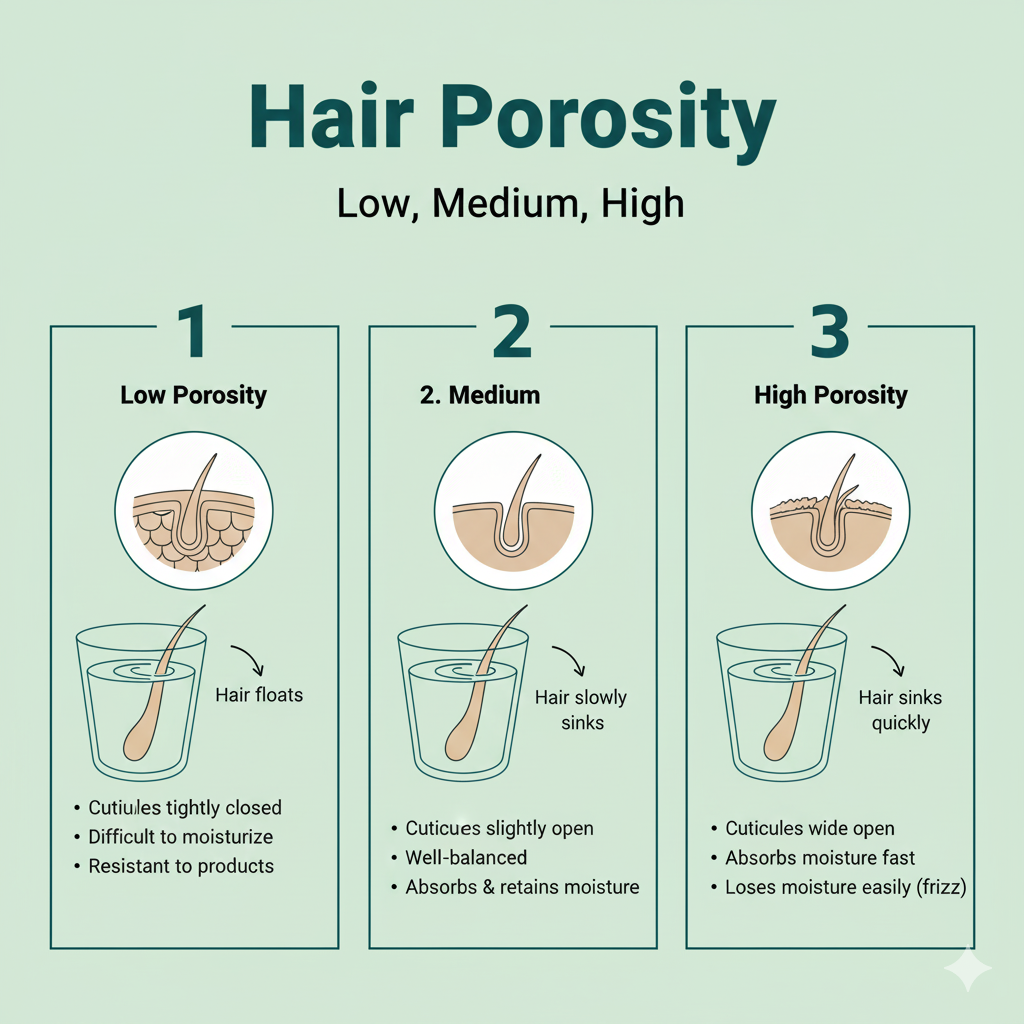
This is a super important one for understanding how your hair absorbs and retains moisture. It refers to how open or closed your hair’s cuticle layers are.
Low Porosity: The cuticle layers are tightly closed.
- Pros: Hair can be very shiny and smooth.
- Cons: Can be difficult for moisture (and products!) to penetrate. Products might sit on top of your hair.
- Test: Hair floats in a glass of water.
- Care: Use lightweight products, apply heat (like a warm towel after conditioning) to help products penetrate.
Medium Porosity: The cuticle layers are slightly open.
- Pros: Hair tends to be well-balanced, accepts and retains moisture well.
- Cons: Not many!
- Test: Hair floats for a bit then slowly sinks.
- Care: Generally easy to manage, don’t overdo heavy products.
High Porosity: The cuticle layers are very open (often due to damage from heat, chemical treatments, or genetics).
- Pros: Absorbs moisture very quickly.
- Cons: Also loses moisture just as quickly, leading to dryness, frizz, and tangles.
- Test: Hair sinks quickly in a glass of water.
- Care: Focus on deep conditioning, use leave-in conditioners, seal in moisture with oils, and avoid excessive heat.
Here’s a simple visual to help understand porosity:
Wrapping It Up: Your Hair Journey Starts Now!
Now that you’ve journeyed through the cuticles, the cortex, the different curl patterns, and the secrets of porosity, you’re officially a hair structure expert!
Understanding your hair’s unique blueprint—whether it’s low porosity 1A or high porosity 4C—is the most powerful step you can take toward achieving your hair goals. No more blindly buying products based on marketing! You can now choose shampoos, conditioners, and styling aids that truly match your hair’s fundamental needs for protein, moisture, or light hydration.
Healthy hair is an ongoing process, not a destination. Embrace the unique texture you were given, treat it with the care it deserves, and watch your magnificent, healthy hair thrive!